


Jason Janas’ Near-Death Experience: The Light, the Love, and a Faith Rewritten
Last updated: September 12, 2026
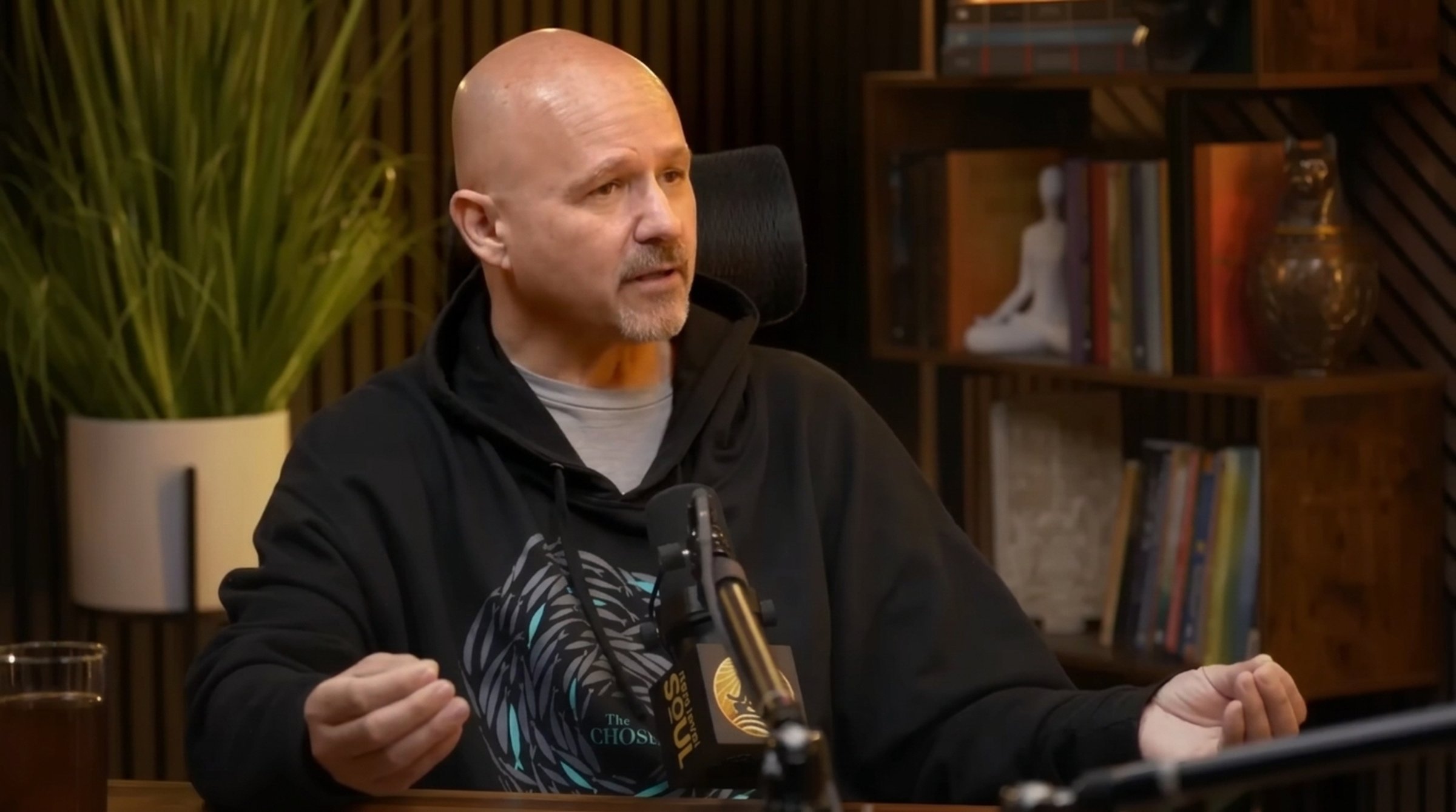
Jason Janas remembers an ordinary meal turning into a medical emergency. He remembers blood, the terrifying struggle to breathe, intensive care, and the physical misery of a body he believed was failing. But the part of his story that has shaped everything since is very different: being above his body, seeing in every direction, entering what he describes as an immense field of light and love, recognizing a divine presence, encountering Jesus, and experiencing a certainty that he had somehow returned home.
For Janas, the experience did not simply make death less frightening. It altered his understanding of God, religion, judgment, identity, suffering and what it means to be alive. Beliefs that had once seemed fixed became difficult for him to hold in quite the same way. The man who returned from the hospital was still Jason, but the spiritual map through which he understood his life had been redrawn.
His account belongs to a wider human phenomenon generally called a near-death experience, or NDE. Researchers have documented recurring elements across many such reports: a sense of leaving the body, unusually vivid awareness, peace, brilliant light, encounters interpreted as deceased people or spiritual beings, altered perceptions of time, and a feeling of profound knowledge or unconditional love. Not every NDE contains these features, and not every experience is peaceful. Yet Janas’ story contains several motifs that have appeared repeatedly in decades of NDE research.
An important distinction
Jason Janas’ medical and spiritual experiences are described here as his reported experience. Mindelly has not reviewed his private hospital records. His public website and multiple interviews describe a severe medical crisis and ICU stay in 2020, but details such as his precise physiological condition, the amount of blood removed from his lungs, and what occurred medically at the exact time of his NDE should not be treated as independently verified clinical findings.
The Day an Ordinary Meal Became an Emergency
Janas dates the crisis that changed his life to April 2020, during the first weeks of the COVID-19 pandemic in the United States. His own account begins without ceremony. He had come home, made something to eat and sat down. Then breathing became difficult. He coughed and saw bright red blood.
The bleeding continued. What had been a normal evening became frightening very quickly. Janas has described trying to contact his former wife, who was a nurse. In his recollection, she understood the seriousness of the situation before he did and warned him not to simply lie down and go to sleep.
His memory then breaks. He does not describe a continuous sequence from his home to an ambulance to the hospital. Instead, the next part of his recollection is waking in intensive care surrounded by medical equipment, restrained for his protection, intubated and unable to communicate normally.

On his official biography, Janas says tumors in his lungs ruptured and describes his condition as acute respiratory failure with hypoxia. He says he spent approximately a month in intensive care. In public interviews, he has given additional details about the bleeding and treatment. Those particulars remain part of Janas’ own medical narrative rather than an independently reviewed case report.
That distinction matters, but it does not make the human experience less significant. Whatever conclusions someone ultimately reaches about an NDE, Janas describes having lived through an exceptionally frightening medical crisis followed by an experience that he remembers as more vivid and meaningful than ordinary waking life.
Before the Light Came Pain, Confusion and the ICU
Near-death stories can become polished with retelling. The frightening hospital room disappears and only the luminous experience remains. Janas’ account is harder-edged than that.
He remembers waking in intense physical distress. He has spoken openly about pain, weakness and frightening hallucination-like experiences during his hospitalization. He describes the medical portion of the ordeal as brutal. That detail matters because intensive care is an unusual psychological environment: severe illness, reduced oxygenation, sedation, pain medication, interrupted sleep, invasive procedures and delirium can all affect perception and memory.
In a detailed public interview, Janas separately describes frightening hospital hallucinations and the experience he identifies as his NDE. To him, the two did not feel remotely the same.
That subjective distinction appears in broader NDE testimony as well. Experiencers often say the episode they identify as an NDE felt unusually clear, coherent or “more real” than dreams or confusion surrounding their illness. That description helps us understand what the experience was like for the person. It does not, by itself, establish what mechanism produced it.
Three layers worth keeping separate
- Medical events: what happened physiologically during the emergency and ICU treatment.
- Experienced events: what Janas remembers perceiving while critically ill.
- Spiritual interpretation: what he believes the experience revealed about God, death, consciousness and human life.
All three can matter without being treated as interchangeable. A medical explanation for some aspects of perception would not automatically erase the spiritual significance an experiencer finds in them. Conversely, the fact that an experience feels spiritually decisive to someone does not make every metaphysical conclusion independently established.
The Presence in the Room
Among the most intriguing details in Janas’ story is that the experience did not begin, in his memory, with a tunnel or an instantaneous leap into another realm. It began with a presence.
He says that after regaining awareness in the hospital, he repeatedly sensed someone or something near the television in his room. He could not see an ordinary person standing there, yet the presence felt unmistakable to him. Nurses apparently noticed his repeated attention toward that part of the room and interpreted it more mundanely, asking if he wanted the television turned on.
Janas has described the presence as loving rather than threatening. That mattered because his physical circumstances were filled with fear. The room contained suffering, medical machinery and a body that no longer felt reliable. The unseen presence, by contrast, seemed to offer a direction toward which his attention was repeatedly pulled.
Eventually he found himself alone and looking again toward that area. He was physically depleted. In one of his detailed retellings, he says it had been many years since he had spoken to God with anything resembling the faith of his childhood.
Then he prayed.
A Childhood Faith He Had a Complicated Relationship With
The religious dimension of Janas’ NDE becomes more understandable when set against his earlier relationship with Christianity — although his public accounts describe that earlier period with noticeably different emphasis.
In detailed interviews, Janas has described growing up Catholic through his grandparents, attending Catholic school, serving as an altar boy and absorbing early teachings about God, heaven, hell, angels, demons, sin and judgment. In the same accounts, he describes an abusive childhood and says that suffering contributed to anger toward God and a period of estrangement from active faith.
His current official biography summarizes the period differently, describing him as a “devoted Christian” whose faith was part of everyday life before the 2020 crisis. The two descriptions do not fit together perfectly. The safest conclusion is that Christianity was formative in Janas’ life, while his longer retellings portray his relationship with God and organized religion as considerably more complicated than the brief biography suggests.
That complexity became emotionally important in the hospital. In the detailed version of his story, his prayer was not presented as a calm theological exercise. It was the plea of someone who believed he might still die. He asked not to be taken from the people he loved and spoke to God with an intensity he associated with childhood faith. Fear stripped away abstraction.
Then, in his account, the room disappeared as the center of his awareness.
At the Ceiling: The Out-of-Body Moment
Janas says he suddenly found himself above his physical body near the ceiling.
The viewpoint is familiar from many out-of-body narratives, yet several details stand out in his description. He says his awareness was not limited to the forward-facing field of vision associated with physical eyes. Instead, he recalls a kind of simultaneous 360-degree perception. He believed he could see his body below, the surrounding clinical environment and beyond the room itself.
He also recalls an extraordinary richness of visual detail. Outside, grass seemed intensely alive. Individual blades appeared distinct. Colors seemed more fluid, vivid and saturated than ordinary earthly color. Trees and other living things appeared to possess a spiritual dimension of their own.

Descriptions of heightened perception occur in other NDE accounts. The University of Virginia Division of Perceptual Studies lists sensations of leaving the body, unusually clear thought, brilliant light, profound peace or unconditional love, a sense of unusual knowledge and encounters interpreted as deceased people or religious figures among commonly reported NDE features.
That does not mean all NDEs follow a fixed script. They do not. Some contain only a few features. Some are fragmented. Some are frightening. Cultural and religious frameworks can influence how unusual experiences are interpreted and described. But Janas’ report falls recognizably within several well-known NDE themes.
What “out-of-body experience” means here
An out-of-body experience describes the subjective sensation that awareness or one’s point of perception is located outside the physical body. The term describes the experience itself. It does not, on its own, settle the separate scientific or philosophical question of whether consciousness literally left the body.
The Pain Vanished
The contrast between Janas’ physical suffering and what he reports experiencing next is central to the story.
In the hospital, his body had been a source of pain, weakness and limitation. Outside it, as he remembers the episode, pain was simply absent. He did not describe relief in the ordinary sense of a painkiller beginning to work. He describes a complete change of state.
The fear also changed. A man who moments earlier had begged not to die found himself feeling that dying was somehow natural. The emotional center of the experience was not annihilation but recognition.
His simplest description of that recognition is also one of the most powerful: “I’m home.”
For Janas, those words did not mean that he had reasoned his way to a theory of the afterlife. He describes it as immediate knowledge. The feeling of belonging arrived before an argument could be constructed around it.
The Light Was Not Just Something He Saw
“Light” can sound almost generic in conversations about NDEs because it appears so often. In Janas’ account, however, the light is more than a visual object.

He associates it with presence, awareness, belonging and an intensity of love that he says has no ordinary equivalent. Rather than looking toward a distant light, he describes being immersed in it and eventually identifying himself with it.
The emotional quality matters. Janas repeatedly returns to unconditional love when speaking publicly about the experience. He did not experience the divine primarily as judgment. The dominant feeling, as he tells it, was complete acceptance.
That challenged something very old in him. The moral universe he had absorbed as a child had included powerful distinctions between sin and righteousness, salvation and punishment, heaven and hell. Yet in the state he interpreted as contact with God, he says he experienced love before judgment and belonging before condemnation.
This is where personal testimony and theology need to remain distinct. Janas’ experience led him toward particular conclusions about God and religion. People from the same religious tradition may interpret similar experiences differently, and different faith traditions contain their own understandings of death, judgment, union with God and the afterlife.
The importance of the experience lies partly in that tension. Janas did not return saying that his earlier religious categories had simply been confirmed. He describes them as having been transformed.
What Does Unconditional Love Mean in an NDE?
When NDE experiencers use the phrase “unconditional love,” it can be easy to hear it as ordinary inspirational language. Their descriptions often suggest something more radical.
Ordinary human love is shaped by relationship, history, behavior, loyalty, memory and expectation. The love Janas describes is not presented as approval earned through good behavior. It is closer to an atmosphere in which he felt completely known and yet not rejected.
That difference helps explain why the experience became so disruptive to his previous theology. Someone can intellectually hear the phrase “God loves you” thousands of times. Feeling, even briefly, that one is entirely seen and entirely loved is a different psychological and spiritual event.
Janas describes the love as immediate, overwhelming and familiar. He did not feel that he had arrived before a stranger. He felt recognized.
A reader might understand that experience as contact with God, a state produced by a brain under extreme physiological stress, a form of altered consciousness, or something that current models do not fully explain. The emotional aftereffect can still be understood without forcing a single metaphysical conclusion. An experience of absolute acceptance can reorganize a person’s values even when two observers disagree completely about its ultimate source.
The Sense of Knowing Everything
Another element Janas describes is a sudden sense of complete knowledge.
This is not unusual within NDE literature. Some experiencers report that questions disappeared because understanding felt immediate. Others describe access to knowledge they cannot fully retrieve once ordinary consciousness resumes. The experience can feel less like learning facts and more like temporarily inhabiting a state in which everything makes sense.
Janas speaks in similarly sweeping terms. He describes knowing rather than reasoning. Time no longer seemed to behave normally. Separation between himself, God and existence seemed to dissolve.
Those experiences eventually became the foundation of his later spiritual language about unity. But a subtle problem often follows this kind of NDE: something that feels completely clear in the experience may be extraordinarily difficult to translate back into ordinary words.
Language requires distinctions. Subject and object. Before and after. Me and you. Cause and effect. Mystical experiences are often described precisely as moments in which those distinctions weaken or vanish. An experiencer can therefore return with absolute certainty that something happened while struggling to explain exactly what happened.
A useful way to read NDE language
Words such as “light,” “home,” “oneness,” “God,” “timelessness” and “knowing” are often attempts to translate unusual states of consciousness into ordinary language. The words matter, but they should not always be assumed to capture the full experience literally or identically across different people.
Then He Says Jesus Appeared
For Janas, the NDE was not only an encounter with an impersonal field of light.
He says another presence appeared, and he recognized it as Jesus — whom he also refers to as Yeshua.

Again, recognition is the key word. Janas does not describe conducting a visual identification or asking the figure to introduce himself. He describes an immediate sense of knowing who was present.
The encounter is especially striking given the complicated relationship with Christianity he describes in his longer interviews. Yet the figure he interpreted as Jesus did not appear, in his experience, as an enforcer of religious doctrine. Janas describes the encounter in the same emotional vocabulary that surrounds the rest of the NDE: warmth, recognition, tenderness and extraordinary love.
Some Christian readers may understand the experience through traditional Christian beliefs about Christ. Others may be uncomfortable with Janas’ later theological conclusions. People outside Christianity may interpret the figure symbolically, culturally or psychologically. NDE research does not provide a simple scientific method for deciding which spiritual interpretation a particular figure “really” represents.
What can be said with confidence is that Janas experienced the encounter as deeply personal and describes it as one of the defining moments of his life.
The Return to His Body
Many NDE accounts contain a boundary, decision or return. Sometimes experiencers say they were told it was not their time. Sometimes they remember choosing to return because of children or unfinished responsibilities. Sometimes they simply find themselves back in their bodies without knowing why.
Janas’ description is unusually tactile.
He says the presence he identified as Jesus placed hands on him and gently guided him downward. His sense of being a soul outside the body shifted into a sensation of being returned to physical form. He then recalls losing awareness before waking again amid medical staff.
One of his first reactions was not evangelistic excitement. It was fear that people would think he had lost his mind.
That reaction is worth noticing. Extraordinary experiences do not automatically become easy stories. A person may return from an episode they regard as sacred while still inhabiting a hospital, a recovering body and a social world in which they have no idea how the story will be received.
Coming Back Can Be Harder Than the Story Suggests
Popular NDE stories often have a satisfying arc: crisis, light, revelation, recovery, gratitude. Real integration can be much messier.
Janas has described becoming deeply depressed after returning. To someone who had just experienced what he interpreted as complete peace and unconditional love, ordinary life could feel painfully heavy by comparison. Human anger, conflict, fear and suffering became difficult to tolerate.
That apparent contradiction — a beautiful NDE followed by psychological difficulty — is not as strange as it first sounds.
A 2025 systematic review of NDE aftereffects found that positive NDEs are often associated with increased spirituality, decreased fear of death, greater appreciation of life and increased compassion. The same review found that negative NDEs can be associated with confusion, emotional distress and lasting trauma, while integration of either type of experience can present social or emotional challenges.
A 2026 scoping review focused on adult ICU patients likewise describes NDEs as multidimensional experiences with potentially important implications for psychological recovery after intensive care.
In other words, “life-changing” does not always mean immediately easier.
Worth knowing
A profound spiritual experience can coexist with depression, confusion, grief, trauma or difficulty readjusting after critical illness. Spiritual meaning and appropriate psychological or medical support are not mutually exclusive.
Why Integrating an NDE Can Take Years
The word integration is useful because an NDE does not end when the person opens their eyes. If the experience changes someone’s understanding of death, God, identity or reality itself, ordinary life has to absorb that change somehow.
Imagine returning to the same home, relationships, responsibilities and routines while feeling that your most basic assumptions have shifted. The grocery store still opens at the same time. Bills still arrive. Other people may be talking about work, traffic and weekend plans while your mind is occupied with questions about consciousness, eternity and why you came back at all.
That mismatch can be isolating. An experiencer may fear ridicule if they speak openly. A religious community may welcome parts of the story but reject interpretations that do not fit doctrine. Secular friends may accept that something psychologically profound happened while being uncomfortable with spiritual language. Family members may simply want the person they knew before the crisis to return to normal.
Yet “normal” may no longer mean what it once did.
This helps explain why NDE aftereffects deserve attention independent of debates about the afterlife. An experiencer can need room to make sense of what happened even when nobody around them shares their interpretation. Listening does not require confirming every supernatural conclusion. It requires recognizing that the event may have become one of the most consequential experiences of that person’s life.
Janas’ public life after 2020 can be understood partly through that lens. He did not simply recover physically and file the experience away. He gradually built a vocabulary around it, spoke publicly about it, reconsidered long-held religious ideas and eventually made the experience central to his work.
What Janas Says Changed About God
The most dramatic aftereffect was theological.
Janas did not emerge from the experience rejecting God. If anything, God became more immediate to him. What changed was his understanding of the relationship between God and religious doctrine.
He came to believe that divine love was larger than systems of punishment, fear and separation he associated with parts of his religious background. Ideas about heaven and hell, moral condemnation and human unworthiness were reconsidered through the lens of what he believed he had personally experienced.
That makes his story difficult to reduce to either “Christian testimony” or “rejection of Christianity.” Jesus remains central to his account. God remains central. Yet his interpretation is not simply a return to conventional Catholic doctrine.
Instead, the experience seems to have moved his spirituality toward direct encounter. Rather than beginning with propositions about what God is, Janas begins with the memory of what he felt: an all-encompassing love in which fear and condemnation seemed absent.
“You Are My Son” and the Question of Worthiness
The NDE did not instantly resolve everything.
Janas has described wrestling afterward with the idea that he was the wrong person to have received such an experience. His biography before the crisis did not fit his own image of a holy messenger. He had regrets. He had lived through broken relationships and hardship. He did not consider himself spiritually exceptional.
Months later, he says he angrily confronted God in private, essentially asking why someone like him had been chosen. In his public retelling, he reports receiving a short response: “Why not? You are my son.”
For Janas, the message deepened the theme already present in the NDE. Worthiness was not something that had to be earned before love became available. The relationship came first.
Whatever a reader believes about the source of that later experience, its psychological meaning is easy to recognize. Janas’ spiritual transformation involved not only changing ideas about God, but changing his relationship to himself.
His NDE Fits Several Familiar Patterns — But Not a Formula
Modern NDE research has spent decades trying to describe these experiences systematically rather than relying only on dramatic anecdotes.
Psychiatrist Bruce Greyson developed the 16-item Near-Death Experience Scale in 1983 to give researchers a standardized way to characterize NDE phenomenology. The final scale groups its questions into cognitive, affective, paranormal and transcendental components. It does not determine whether an experience proves an afterlife; it helps researchers identify and compare characteristics people report.
The scale has remained influential for decades. A 2026 psychometric comparison involving 705 self-identified NDE experiencers found substantial stability in its underlying structure and recommended continued use of the original scale with its established scoring approach, while also discussing limitations in newer measurement alternatives.
Janas’ story contains several motifs familiar from this broader literature: altered time, separation from the body, unusually vivid perception, intense peace, a sense of extraordinary knowledge, brilliant light, a powerful feeling of love, and an encounter interpreted in explicitly religious terms.
Yet no checklist should flatten the story into a template. The emotionally decisive details are distinctly his: his complicated relationship with Christianity, the presence near the television, the grass that seemed alive, the recognition of Jesus, and the challenge of returning to a world that felt emotionally harsher than the state he had just experienced.
How Common Are Near-Death Experiences?
There is no single percentage that applies to everyone who comes close to death.
Different studies examine different populations, use different definitions, interview people at different times, and employ different questionnaires. That produces wide variation.
One of the most frequently cited prospective studies followed 344 people who had been successfully resuscitated after cardiac arrest in ten Dutch hospitals. Published in The Lancet in 2001, it reported an NDE in 62 participants, or 18 percent, with 41 participants — 12 percent — classified as having a core experience.
A 2024 scoping review of prospective cardiac-arrest studies found reported NDE incidence ranging from 6.3 percent to 39.3 percent among the included studies. The researchers emphasized substantial heterogeneity between studies and noted that questionnaires may influence the language through which participants’ experiences are reported.
A 2026 review focused specifically on adult ICU patients states that NDEs occur in approximately 15 percent of ICU survivors, while emphasizing the need for better recognition and assessment in clinical settings.
The short version
NDEs are not reported by everyone who survives a life-threatening event, but they are common enough to have been documented prospectively in hospitals and studied systematically for decades.
Does Science Explain Near-Death Experiences?
This is where conversations about NDEs can quickly split into opposing camps.
One position treats an NDE as obvious proof that consciousness survives death. Another treats it as obviously nothing more than a hallucinating brain. Neither captures the uncertainty of the research landscape particularly well.
Researchers have proposed neurophysiological and psychological mechanisms involving changes in cerebral blood flow and oxygenation, altered brain-network activity, neurotransmitter changes, threat responses, dissociation and other processes associated with extreme physiological states. A 2025 review in Nature Reviews Neurology attempted to integrate several of these strands into a unified neuroscientific model of NDEs.

The proposed model is significant because it brings multiple physiological and psychological mechanisms together. It should not be confused with a direct demonstration that every feature of every reported NDE has been conclusively explained. Researchers continue to debate how individual findings should be interpreted and how reliably the timing of subjective experiences can be mapped onto rapidly changing physiological states.
The important point is that NDE research remains an active field rather than a scientific verdict carved in stone.
Science can study who reports NDEs, when they occur, their recurring phenomenology, brain activity during resuscitation, memory characteristics, psychological outcomes and possible mechanisms. It can test specific claims when suitable evidence is available. It is much harder to move from those observations to a definitive statement about the ultimate metaphysical nature of consciousness or an afterlife.
What about awareness during cardiac arrest?
Studies of cardiac arrest are especially interesting because they allow researchers to investigate consciousness around a period of profound physiological crisis.
The AWARE II study, published in 2023, examined consciousness and recalled experiences during cardiac arrest and resuscitation. Of 567 in-hospital cardiac arrests included in the study, 53 people survived and 28 completed interviews. Eleven of those 28 reported memories or perceptions suggestive of consciousness, including six categorized by the researchers as transcendent recalled experiences of death.
Attempts to test perception using hidden visual and auditory targets produced very limited results: nobody identified the visual image, while one of the 28 interviewed survivors identified the auditory stimulus. The investigators also reported that EEG activity in delta, theta and alpha ranges that they considered consistent with consciousness emerged in some cases as long as 35 to 60 minutes into CPR.
That combination is fascinating precisely because it resists easy slogans. The findings give researchers reasons to investigate consciousness during resuscitation more closely. They do not establish that every NDE occurs independently of the brain, nor do they prove that every reported experience can be reduced to one known biological mechanism.
Could Janas’ Experience Have Been an ICU Hallucination?
It is a reasonable question, especially because Janas was critically ill and has himself described other hallucination-like experiences during hospitalization.
ICU delirium is real. Severe illness, sedatives, analgesics, sleep disruption, inflammation, metabolic disturbance and reduced oxygenation can all contribute to profound alterations in awareness. Patients can experience vivid scenes, threatening beliefs and confused memories that feel entirely real in the moment.
People who report NDEs, however, often describe phenomenology that they themselves distinguish sharply from delirium or ordinary dreams. Janas makes that distinction explicitly. His frightening ICU hallucinations were chaotic and disturbing. The experience he identifies as the NDE, by contrast, is remembered as coherent, lucid, peaceful and unusually vivid.
That difference is worthy of study, but subjective clarity is not a laboratory test of metaphysical origin. Human brains can generate extraordinarily convincing experiences. At the same time, simply labeling an experience “hallucination” does not by itself explain every feature researchers are interested in, including the structure, memory characteristics and enduring aftereffects reported by some experiencers.
A more useful question may therefore be narrower: What features distinguish NDE reports from other altered states around critical illness, and what mechanisms best account for those differences? That is a question research can continue to investigate without demanding that the answer be decided in advance.
Not Every Near-Death Experience Is Beautiful
Janas’ account centers on extraordinary love. That should not become a rule imposed on everyone else.
Researchers and NDE organizations have also documented distressing experiences characterized by fear, emptiness, isolation, threatening imagery or an unbearable sense of losing control. Some people initially interpret an experience as frightening and later find meaning in it. Others continue to struggle with what happened.
That variation is important for spiritual conversations. It prevents a beautiful NDE from becoming a new form of pressure: the assumption that everyone who comes close to death must see light, meet a loved one, encounter Jesus, feel peace or return with the same theology.
Janas’ story belongs to him. Its value does not require every other person’s story to resemble it.
Why Religion Appears Differently in Different NDEs
Janas recognized Jesus. Another experiencer may report a deceased relative. Someone from another religious culture may use entirely different language. Another person may describe a loving presence without identifying it at all.
This raises a fascinating question: are people encountering different spiritual realities, translating a common reality through cultural language, generating experiences through memory and expectation, or participating in something that does not fit neatly into any of those categories?
Research cannot currently settle that philosophical question.
Culture can influence how humans interpret unusual experiences. But cultural variation does not automatically prove that the underlying experience is entirely invented by culture. Shared motifs across different populations have also attracted considerable research interest.
The strongest approach is therefore neither to erase the religious identity of an experience nor to assume a single person’s interpretation is universal. Janas says he encountered Jesus. That statement accurately conveys his experience. It does not require Mindelly to tell every reader what that encounter must mean for them.
Why the Experience Changed His Fear of Death
A reduction in fear of death is one of the most frequently discussed aftereffects of NDEs.
For Janas, the reason is straightforward. He believes he experienced death not as extinction but as return. “Home” became the emotional shorthand for that certainty.
A person who interprets an NDE this way may emerge with a radically altered hierarchy of fears. Death can become less frightening while wasting life becomes more troubling. Status may matter less. Relationships may matter more. Old resentments can seem strangely small. Questions about purpose can become urgent.
This does not mean fear disappears completely or that an experiencer becomes indifferent to physical survival. Janas’ own story begins with a desperate wish to live and remain with the people he loves. Reduced fear of death is not the same thing as wanting to die.
An essential boundary
Stories about peaceful NDEs should never be used to romanticize self-harm or make death sound like a shortcut to spiritual discovery. A near-death account can be meaningful while life-threatening crises remain exactly that: emergencies in which appropriate medical help matters.
The Hard Question: Did Jason Janas Actually Die?
NDE storytelling often uses the phrase “I died,” but medically the word death can refer to different states and thresholds.
Cardiac arrest, respiratory arrest, loss of consciousness, severe hypoxia, temporary absence of measurable vital signs and irreversible brain death are not interchangeable conditions. A person can be successfully resuscitated after cardiac arrest; irreversible death, by definition, is not followed by recovery.
Janas’ official biography uses the wording that his “cause of death” was acute respiratory failure and hypoxia, and some podcast descriptions of his story state that he was pronounced dead and resuscitated. Without access to his hospital records, Mindelly cannot establish exactly which clinical criteria were documented, when they occurred or for how long.
That is why the careful formulation is that Janas experienced a severe, life-threatening medical crisis and reports a near-death experience during the course of that hospitalization.
This is not merely cautious wording. Precision allows the spiritual claim and the medical claim to remain distinct instead of making one carry evidence it does not possess.
A Near-Death Experience Does Not Need to Become a Doctrine
One of the most interesting aspects of Janas’ message is also where a reader may need the most freedom.
He has reached strong conclusions about reality, God, consciousness and religion. Those conclusions are understandable in light of the certainty he associates with his experience. But another person can be moved by his story without adopting every metaphysical conclusion attached to it.
Someone can find the theme of unconditional love meaningful without deciding that conventional heaven and hell do not exist. Someone can be intrigued by his out-of-body perception without concluding that consciousness has been scientifically demonstrated to operate independently of the brain. A Christian can believe his encounter with Jesus was authentic without agreeing with every theological interpretation Janas later developed.
Spiritual testimony becomes richer, not weaker, when a reader is allowed to encounter it without coercion.
What Makes NDE Memories Feel So Different?
Another reason NDE accounts remain compelling is the way experiencers talk about memory.
Ordinary dreams can be intense while they are happening and almost inaccessible an hour later. NDE memories are often described as enduring, vivid and autobiographically important. Recent ICU-focused research has likewise identified the potentially long-lasting psychological significance of such experiences.
Janas’ public retellings show a broadly consistent central structure even when details and emphasis vary: the medical crisis, ICU, sensed presence, prayer, separation from the body, expanded perception, light, unconditional love, recognition of God and Jesus, return, and subsequent reorganization of belief.
Memory persistence alone does not tell researchers what caused an experience. A deeply encoded event can remain vivid for many reasons. It does help explain why telling an experiencer that the episode was “just a dream” can feel profoundly disconnected from what they remember having lived through.
How to Listen When Someone Tells You They Had an NDE
Near-death experiences are often discussed as mysteries of consciousness, but there is another side to them: eventually, someone has to tell another human being what happened.
That first conversation can matter enormously.
Immediate ridicule can close the conversation before the experiencer has begun to understand it themselves. Immediate certainty can be unhelpful in a different way. Telling someone that they definitely visited heaven, definitely hallucinated, definitely encountered a particular deity or definitely discovered the nature of consciousness places somebody else’s explanation on top of an experience they are still trying to process.
A more humane response can be much simpler: listen carefully. Ask what the experience felt like. Ask what changed afterward. Allow the person to describe it in their own language before trying to translate it into religious, psychological or scientific categories.
This approach does not require abandoning discernment. If someone is struggling after critical illness, depression, trauma, anxiety, confusion or persistent perceptual disturbances still deserve appropriate professional attention. Respecting spiritual meaning and taking mental or physical health seriously are not opposing choices.
Perhaps that is one reason Janas’ fear of sounding unbelievable is such an important detail. Before an extraordinary experience can become a public story, it is first a vulnerable disclosure.
The Aftereffect That Matters Most to Janas: Love
It is possible to become so absorbed in questions about proof that the practical center of Janas’ story disappears.
For him, the experience was not principally a scientific puzzle. It became a moral and spiritual reorientation toward love.
The word can sound almost too simple for the scale of the claims surrounding it. Yet simplicity may be part of the point. If the most profound state he remembers was one of unconditional connection, then everyday choices acquire a different significance. How someone treats a partner, child, stranger or themselves becomes more spiritually consequential than winning arguments about metaphysics.
This emphasis also helps explain why Janas’ public work today focuses on themes including awareness, fear, authenticity, forgiveness, purpose and personal responsibility.
His official site currently describes him as a near-death experiencer, speaker and coach and advertises one-on-one coaching sessions. In 2026, the International Association for Near-Death Studies featured him in its Stellar Speaker Series in a presentation titled Love Is Everything: What a Near-Death Experience Revealed About Fear, Faith, and Who We Really Are.
The title is a useful distillation of where his story ultimately landed. The experience began with blood and fear. The message he chose to carry forward is love.
Why Stories Like His Resonate So Deeply
An NDE account touches questions most people cannot keep abstract forever.
What happens when consciousness ends? Does anything of us continue? Are the people we love truly lost when they die? Is there judgment? Does suffering have meaning? Is God personal? Can someone feel loved after spending years believing they were unworthy?

No laboratory result makes those questions emotionally neutral.
That is why readers can react strongly in opposite directions. Someone grieving a loved one may hear reassurance. Someone wounded by religion may recognize Janas’ struggle with fear-based beliefs. Someone interested in consciousness may focus on the out-of-body elements. A committed Christian may focus on his encounter with Jesus. A skeptic may be interested in how a critically ill brain can generate or accompany extraordinary states. A person who has had an NDE may simply feel relief that someone else speaks a language they recognize.
The story does not have to perform the same function for every reader.
Can an NDE Change Someone’s Personality?
Research into NDE aftereffects suggests that significant changes in values and outlook are far from unusual.
Experiencers have reported increased appreciation of life, greater interest in spirituality, stronger compassion and decreased fear of death. Not every experiencer changes in the same direction, and researchers must also consider the enormous psychological impact of surviving a medical emergency.
Still, transformation has been sufficiently common to become a major area of NDE research rather than an incidental footnote.
Janas fits that pattern strongly. His NDE did not merely add a supernatural story to an otherwise unchanged life. It altered how he describes his identity, what he believes deserves attention and what he understands spirituality to be.
That transformation is, in one sense, easier to establish than the metaphysical explanation for the experience. Whatever happened during those extraordinary moments, the person afterward understood his life differently.
What His Story Does — and Does Not — Prove
Janas’ story demonstrates something important about human experience: a person can undergo an extraordinary subjective event during a life-threatening crisis and emerge convinced that it revealed something fundamental about existence.
It also belongs to a larger documented pattern. Many NDE accounts contain overlapping themes, and those themes have been studied systematically rather than existing only in folklore.
What one person’s testimony cannot independently prove is that every element corresponds literally to an external spiritual reality. A remembered encounter with Jesus is not the same type of evidence as a laboratory measurement. A feeling of leaving the body is not by itself proof that consciousness physically separated from the brain.
But the reverse mistake is also possible. The absence of definitive proof for an afterlife does not make a personal NDE meaningless, nor does it mean every scientific question about consciousness in near-death conditions has already been settled.
There is room between certainty and dismissal.
What this means
You do not have to choose between treating Janas respectfully and asking careful questions. An open mind can take spiritual testimony seriously without converting personal experience into universal proof.
Questions People Commonly Ask About Jason Janas’ NDE
When did Jason Janas have his near-death experience?
Janas places the medical crisis in April 2020. He has repeatedly described that period as the turning point that transformed his beliefs about God, death and human purpose.
What happened medically?
According to Janas’ public account, he developed severe bleeding involving his lungs, experienced acute respiratory failure and hypoxia, and spent approximately a month in intensive care. His official site says tumors in his lungs ruptured. Mindelly has not reviewed hospital documentation that would independently establish all of the detailed medical claims appearing in his public accounts.
Did Jason Janas say he left his body?
Yes. He reports suddenly perceiving himself from near the ceiling, seeing his physical body below and experiencing what he describes as 360-degree awareness.
Did he see God?
Janas says he encountered an overwhelming field or presence of light and love that he understood to be God. His description emphasizes recognition and unity more than the sight of a human-like figure.
Did he meet Jesus?
He says yes. Janas reports recognizing another presence as Jesus, or Yeshua, and describes that presence as loving and involved in guiding him back toward his physical body.
Did the experience make him more religious?
It appears to have made him more intensely spiritual, but not simply more conventionally religious. God and Jesus remain central to his worldview, while several doctrines and fear-based religious ideas associated with his earlier Christian framework became less persuasive to him.
Does Janas believe in heaven and hell?
His public discussions indicate that his understanding of conventional heaven, hell and judgment changed substantially after the NDE. Those are his personal theological conclusions arising from the experience, not findings established by NDE research.
Are near-death experiences scientifically recognized?
Yes, in the sense that NDEs are recognized and studied as reported human experiences associated with life-threatening situations and other extreme circumstances. Researchers investigate their features, frequency, neurological and psychological mechanisms, memory characteristics and aftereffects. Scientific recognition of the phenomenon does not mean science has established that every spiritual interpretation of an NDE is objectively true.
Can an NDE permanently change someone?
It can be associated with enduring changes. Research has linked positive NDEs with increased spirituality, reduced fear of death, greater compassion and deeper appreciation of life. Some experiencers also encounter distress or difficulty integrating what happened into relationships and ordinary life.
Is Jason Janas still speaking publicly about his experience?
Yes. As of September 2026, his official website presents him as a near-death experiencer, speaker and coach, and he continues to maintain a public presence around the experience. IANDS has also featured his NDE and its aftereffects in its Stellar Speaker Series.
How to Approach a Story Like This Without Losing Either Wonder or Judgment
NDE stories occupy an unusual space. They are deeply personal, yet they make claims that touch universal questions. They can be spiritually moving and scientifically intriguing at the same time.
A reader does not need to flatten that complexity.
One can notice that Janas was critically ill and that altered physiology may be relevant. One can also notice that he distinguishes his coherent NDE from other confused ICU experiences. One can recognize recurring features shared with other NDE reports while remembering that shared motifs do not automatically reveal their cause. One can respect his conviction that he encountered God and Jesus without claiming that conviction settles the question for everyone else.
Perhaps most importantly, a reader can ask what the story does to the way they think about life rather than demanding that it instantly answer the mystery of death.
The Question Jason Janas Brought Back Is Really About Life
The most spectacular parts of Janas’ story happen outside ordinary experience: viewing his body from above, perceiving in every direction, entering brilliant light, recognizing God, encountering Jesus and being returned to his body.
But the lasting challenge of the story is not really what happened for a few extraordinary moments in an ICU.
It is what someone does afterward.
Janas returned convinced that fear had occupied too much space in his earlier spiritual life. He returned believing that love was more fundamental than condemnation. He returned with less certainty about conventional religious boundaries and more certainty, at least personally, that existence was interconnected in ways ordinary perception hides.
Science can continue examining what happens to consciousness near the edge of life. Theology can continue debating what an encounter with God should mean. Philosophy can continue asking how mind and brain relate to one another. None of those conversations is finished.
Janas’ experience does not require a reader to pretend the mystery has been solved.
It leaves a quieter question behind: if a person reached the edge of life and returned convinced that the deepest reality they encountered was unconditional love, what would it mean to take that possibility seriously while still here?
