


Guardian Angel Readings: What They Are, How They Differ From Mediumship, and What to Expect
Last updated: September 13, 2026

Some spiritual readings begin with a very specific question: Can you connect with the person I lost? A guardian angel reading usually begins somewhere else. The focus is not necessarily on identifying a deceased relative or revisiting shared memories. Instead, the reading may turn toward your own life—your patterns, strengths, crossroads, relationships, sense of purpose, and the question of what guidance might be available when you feel stuck.
That distinction helps explain why guardian angel readings can feel quite different from traditional mediumship. Psychic medium Matt Fraser, for example, describes guardian angel readings as a separate form of work from connecting with deceased loved ones. In his spiritual framework, loved ones in spirit may communicate through memories and evidence associated with a shared earthly life, while guardian angels focus more strongly on the recipient’s own path, talents, challenges and direction.
That is one practitioner’s spiritual model—not a universally established fact about angels. Christianity, Judaism, Islam, modern metaphysical spirituality and contemporary psychic practice all use overlapping language about angels, guidance and protection, but they do not mean exactly the same thing. Even among psychic readers, there is no standardized procedure defining what every “guardian angel reading” must contain.
For someone considering a reading, that uncertainty is not necessarily a problem. It simply means that understanding what a particular practitioner actually does matters more than the label alone.
Quick answer: A guardian angel reading is generally a spiritual or intuitive reading focused on guidance, protection, personal patterns and life direction associated with a guardian angel or angelic presence. It differs from classic mediumship because the central question is usually not “Which deceased loved one is communicating?” but “What guidance may be relevant to my life right now?” There is no scientific method that can verify that an angel is communicating, so the most grounded approach is to treat the session as a spiritual and reflective experience rather than guaranteed supernatural proof.
Disclosure: This article contains affiliate links. Mindelly may earn a commission when you use certain links, at no additional cost to you. Spiritual and psychic readings should be approached as personal or reflective experiences and should not replace medical, mental-health, legal or financial advice.
What Is a Guardian Angel Reading?
There is no single institution that certifies a practice called guardian angel reading. The term is used primarily in contemporary psychic, intuitive and metaphysical communities, and practitioners may approach it in very different ways.
One reader may meditate before the session and describe impressions they associate with an angel. Another may use angel or oracle cards. Another may work clairvoyantly, clairaudiently or clairsentiently. Some combine angelic language with numerology, astrology or energy work. Others deliberately avoid tools and describe the session as direct intuitive communication.
Despite those differences, the subject matter tends to be recognizable. A guardian angel reading may explore why the same type of challenge keeps appearing, which abilities you have neglected, why a particular period feels transitional, what relationship patterns deserve attention, or what direction seems most aligned with the person you are becoming.
That can make the experience feel surprisingly different from what many people imagine when they hear the word psychic. The session does not necessarily revolve around predicting future events. It may instead function like a spiritually framed conversation about patterns and possibilities.
This is also why someone who has never lost a person they want to contact might still be interested in an angel reading. Mediumship is frequently sought because of bereavement. Guardian angel work can appeal to someone asking, Why am I here? What am I supposed to learn from this period? Why do I keep feeling pulled toward something different?
The reading is usually centered on you
In Fraser’s description of his own approach, guardian angel readings focus strongly on the recipient’s life journey. Themes can involve talents, creativity, recurring challenges, relationships, confidence and periods when life appears to be redirecting someone.
That helps explain why an angel reading can sometimes resemble life-purpose coaching expressed through a spiritual vocabulary. The reader may talk less about names, dates and deceased relatives and more about recurring themes such as independence, creativity, leadership, caregiving, boundaries, teaching or change.
The spiritual claim is that the information comes from angelic guidance. The observable part is that the conversation invites the recipient to look at their own history from a different angle. Those are two separate layers, and they do not have to be confused.
Guardian Angel Reading vs. Mediumship Reading
The easiest way to understand the distinction is to look at the intended source and purpose of the communication.
A mediumship reading traditionally centers on communication believed to come from someone who has died. The medium may describe memories, relationships, personality traits, circumstances surrounding a death, family dynamics or other impressions intended to identify the person being communicated with.
A guardian angel reading instead attributes the communication to an angelic being or angelic presence. The emphasis is generally not on proving a shared earthly biography. It is more likely to focus on what the recipient is navigating now and how past experiences may connect with present choices.
A simple distinction
- Mediumship: communication believed to involve a deceased person.
- Guardian angel reading: guidance believed to come from an angel connected with the recipient.
- Spirit guide reading: guidance attributed to non-angelic spiritual guides, although definitions vary widely.
- Psychic reading: a broader term that may involve intuition, clairvoyance, prediction, energy reading or other methods without necessarily involving deceased people or angels.
Real-world practice can be much messier than those definitions suggest. A session advertised as psychic may include mediumship. A medium may mention angels. An angel reader may discuss a deceased relative. A tarot reader may interpret cards while also describing intuitive impressions.
That is why it is worth reading a practitioner’s description before booking. The label alone does not tell you exactly what will happen.
ADVERTISEMENT
Curious About a Live Spiritual Reading?
If you want to explore how online live readings work, Oranum offers access to readers across several spiritual categories. Browse first, read individual profiles and choose a style that fits the questions you actually want to explore.
Guardian Angel Reading vs. Psychic Reading
A guardian angel reading can also be distinguished from a general psychic reading.
The word psychic is an umbrella term. A psychic may claim to perceive information intuitively about relationships, work, emotional patterns, future possibilities or another person’s intentions without necessarily attributing the information to a particular spiritual being.
An angel reader, by contrast, usually places the experience inside an explicitly spiritual framework. The practitioner may describe receiving guidance from angels, sensing an angelic presence or interpreting symbols that they associate with angelic communication.
For a client, that difference can affect the atmosphere of the session. A general psychic reading may feel more predictive. An angel reading may feel more devotional, reflective or purpose-oriented. Neither description applies universally, but it is a useful starting distinction.
Guardian Angel Readings and Angel Card Readings Are Not Necessarily the Same Thing
Another source of confusion is the relationship between guardian angel readings and angel cards.
Angel cards are generally a form of oracle card. A deck contains images and messages involving angels, encouragement, spiritual themes, affirmations or archetypal ideas. A reader draws cards and interprets them in relation to the question being asked.
Some guardian angel readers use cards as a tool. Others do not use cards at all. Likewise, someone can perform an angel-card reading without claiming direct communication with a specific guardian angel.
Tarot is different again. Traditional tarot decks have a relatively stable structure of Major and Minor Arcana. Oracle and angel-card decks can vary dramatically in size, imagery and organization.
If you specifically want a reader who claims direct angelic communication rather than card interpretation, check the service description before booking. If you enjoy symbolic tools and prefer something tangible to respond to, an angel-card reading may feel more accessible.
Is a Deceased Loved One Your Guardian Angel?
This is one of the places where everyday language and formal spiritual traditions can collide.
People commonly say that a parent, grandparent, spouse, friend or child who has died is now their guardian angel. Emotionally, the expression is easy to understand. It communicates continuing love, protection and closeness.
In traditional Christian angelology, however, angels and deceased human beings are not normally treated as the same category of being. Catholic teaching describes angels as spiritual creatures and has a distinct tradition of guardian angels. A deceased grandmother does not literally become an angel within that theological framework.
Many contemporary mediums make a similar distinction for different reasons. They may speak of deceased loved ones, spirit guides and guardian angels as separate members of a broader “spirit team.” Fraser, for example, explicitly distinguishes loved ones in spirit from what he describes as a personal guardian angel.
Neither framework prevents someone from affectionately calling a deceased parent “my angel.” It simply helps to know that symbolic everyday language and theological terminology are not always describing the same thing.
Guardian Angels Across Christianity, Judaism and Islam

Angel language feels familiar across several major religions, which can create the impression that every tradition teaches the same guardian-angel system. They do not.
Christianity and guardian angels
Christian traditions contain a long history of belief in angelic protection and assistance. Catholic teaching is especially explicit. The Catechism of the Catholic Church describes human life as surrounded from infancy to death by angelic care and intercession and speaks of an angel standing beside each believer as protector and shepherd.
Within that framework, the angel’s role is tied to God. The angel is not an independent spiritual consultant whose purpose is to fulfill every personal desire. This differs in tone from some modern metaphysical material, where guardian angels may be discussed more like highly personalized guides sending symbols, numbers and intuitive prompts.
Judaism and angels
Jewish scripture and tradition contain extensive references to angels as messengers and agents of God, yet the modern popular idea that every person has a private guardian angel does not map neatly onto all Jewish theology. Jewish sources discuss protective angels and angelic messengers, but contemporary popular guardian-angel language should not automatically be projected onto every strand of Jewish tradition.
That distinction matters because internet spirituality often blends religious imagery into one universal system. Doing so can create an appealing synthesis, but it can also erase meaningful differences between traditions.
Islam and protective angels
The Qur’an includes passages describing angels associated with watching over, recording and protecting human beings by God’s command. Qur’an 13:11, for example, describes successive angels before and behind a person who guard by Allah’s command.
Again, that should not automatically be translated into the contemporary Western idea of one named personal angel communicating through feathers, oracle cards or 444. The traditions overlap around angelic protection while differing substantially in theology and practice.
Worth knowing: “Guardian angel” can refer to a formal religious belief, a modern metaphysical practice, a symbolic way of describing protection, or a practitioner’s personal spiritual framework. Before debating whether two people agree about angels, it helps to establish which meaning each person is actually using.
Guardian Angels, Spirit Guides and the Idea of a “Spirit Team”
The phrase spirit team is common in contemporary metaphysical spirituality. It usually refers to a collection of spiritual helpers that a person believes may include angels, spirit guides, ancestors, deceased loved ones, ascended masters or other benevolent beings.
Unlike guardian angels in established religious traditions, “spirit team” is not a single standardized doctrine. Different readers construct very different maps.
One practitioner may describe one guardian angel and several spirit guides. Another may say guides enter and leave during different phases of life. Another may work almost exclusively with ancestors. Someone from a traditional religious background may reject the entire vocabulary while strongly believing in angels.
The practical lesson is simple: do not assume that one reader’s hierarchy represents a universal map of the unseen world.
If a practitioner says you have one lead guardian angel, that statement belongs to the practitioner’s spiritual framework unless they are specifically explaining an established religious doctrine. If another reader says you have several guardian angels, the disagreement cannot be settled by treating either interpretation as scientifically measured fact.
What is a spirit guide supposed to do?
In modern spiritual language, spirit guides are generally described as nonphysical sources of direction, teaching or support. Some practitioners describe guides as souls who once lived. Others do not. Some associate particular guides with creativity, healing, relationships or spiritual development.
That differs from traditional angel theology, in which angels are not simply deceased humans who acquired a new spiritual role after death.
What about archangels?
Names such as Michael and Gabriel occur within major religious traditions, but modern metaphysical spirituality often assigns additional correspondences involving protection, creativity, communication, healing, colors or crystals. Those contemporary associations should not automatically be presented as ancient universal doctrine.
You can participate in an eclectic spiritual practice and still care about where its ingredients came from. Knowing the distinction can make the practice richer rather than less meaningful.
What Happens During a Guardian Angel Reading?
Because there is no standardized procedure, two guardian angel readings may feel completely different. Still, several patterns are common enough to help a first-time client know what to expect.
1. The reader may begin with broad impressions
A practitioner may describe an emotional theme, personality quality, image, word, color or recurring pattern they associate with angelic guidance. A session may begin with statements about independence, creativity, responsibility, family, boundaries, transition or the feeling that something in your life has reached its natural end.
2. Your past may become part of the reading
A guardian angel reading may revisit difficult periods not to contact someone who died but to interpret how those experiences shaped you. This is where questions about life purpose often appear.
A reader might suggest that surviving a particular challenge developed empathy, resilience or knowledge you now use elsewhere in life. That can be a meaningful reflective frame, but it deserves an important qualification: finding meaning after hardship is not the same as proving that hardship was deliberately assigned to you.
Someone who endured abuse, serious illness, bereavement or another traumatic event should not be told that suffering was necessary, deserved or spiritually required. You are allowed to make something meaningful from an experience without declaring that the experience had to happen.
3. The reading may focus on a crossroads
Career changes, relationships, creative projects, relocation, burnout and spiritual awakening are natural subjects because they involve uncertainty. The reader may interpret a stalled opportunity or recurring feeling as a form of redirection.
4. Symbols may appear
Some practitioners describe colors, numbers, animals, places, songs or visual impressions during an angel reading. The reader may interpret them symbolically rather than literally.
A bridge might be interpreted as transition. A recurring image of water might be connected with emotion or movement. A number could be understood through numerology or angel-number symbolism. These interpretations depend heavily on the reader’s method and should not be mistaken for standardized meanings.
5. You may be invited to ask questions
Useful questions tend to preserve your agency. Instead of asking, “Tell me exactly what I must do,” you might ask, “What pattern would be useful for me to notice?” or “What part of this situation am I overlooking?”
That small difference matters. A reading can offer perspective without turning the reader into the authority responsible for your life.
6. You may leave with themes rather than predictions
A guardian angel reading does not have to end with a concrete prediction such as a date, name or specific future event. You may instead leave with a theme: strengthen your boundaries, return to creative work, stop ignoring exhaustion, communicate more directly or reconsider what success currently means to you.
Those themes can sometimes be more useful than a prediction because they give you something to examine regardless of what happens next.
Online Guardian Angel Readings vs. In-Person Sessions
Angel readings are now widely offered through video calls, live-chat platforms, phone sessions and traditional in-person appointments. Readers who believe their work is intuitive generally do not consider physical proximity necessary, although individual methods differ.
For the client, the practical differences may matter more than the spiritual ones.
Online readings can make comparison easier
An online platform may let you review several readers, specialties and prices before choosing. This can be useful if there are few practitioners near you or if you want a specific style such as mediumship, angel guidance, tarot or astrology.
In-person readings may feel more immersive
Some people prefer sharing a physical room with the practitioner. The ritual of traveling somewhere, sitting down and separating the reading from ordinary daily life can make the experience feel more focused.
Chat can be easier to review afterward
If a platform preserves a written transcript, chat readings can make it easier to revisit what was actually said rather than relying on memory. That can be valuable because emotionally charged sessions are easy to remember selectively.
Per-minute services require extra attention to cost
A reading that feels inexpensive at the beginning can become costly if the conversation continues much longer than planned. Decide on a maximum amount in advance and do not let emotional momentum override it.
When Closed Doors Feel Like Spiritual Redirection
One of the most compelling ideas in Fraser’s discussion of guardian angel readings is that a closed door does not always have to mean permanent rejection. In his spiritual framework, delays and disappointments may sometimes be interpreted as redirection or timing.
That idea resonates because nearly everyone can identify a situation that looked disastrous in real time but made more sense later. A job loss led to a different career. A relationship ended before a healthier one became possible. An opportunity disappeared and, years later, the person realized they had not been prepared for what it would have required.
None of that proves that an angel closed the door.
But the concept can still be useful if it changes the question from Why am I being punished? to What does this situation ask me to reconsider?
A grounded way to reflect on a closed door
- What actually happened, without spiritual interpretation?
- Was the obstacle temporary, permanent or simply unclear?
- What part was outside my control?
- What skill, boundary or preparation would help if another opportunity appears?
- Am I being redirected—or am I using spiritual language to avoid a difficult practical step?
- If I still want the same destination, is there another route toward it?
This approach leaves room for synchronicity without handing every disappointment supernatural authority.
Can Your Struggles Point Toward Your Life Purpose?
The idea that our greatest struggles may become part of our purpose appears in spiritual teaching, memoir, therapy, peer support and ordinary life. Someone who struggled with addiction becomes a recovery counselor. Someone who grew up feeling voiceless becomes an advocate. A person who spent years overwhelmed by money becomes unusually skilled at helping others budget.
What happened was painful. What emerged from it may still become valuable.
A guardian angel reading may frame this as part of the soul’s path. A psychologist might talk about meaning-making, values or growth after adversity. A religious person may speak about vocation. Someone else might simply say, “I learned something difficult, and now I can help someone else.”
Those interpretations are not identical, but they can point toward a similar practical exercise: look for the places where lived experience has given you unusual understanding.
Purpose does not have to mean one grand mission
One reason life-purpose readings can become emotionally intense is the assumption that every person has exactly one hidden assignment. If you choose the wrong career, move to the wrong city or miss the right soulmate, the cosmic plan is ruined.
That belief can create more anxiety than guidance.
A gentler model allows purpose to unfold through several roles and seasons. Your purpose at 25 does not have to look like your purpose at 55. Raising a family, building something, caring for another person, creating art, teaching, learning, serving a community and discovering who you are can all matter without competing for one mystical title.
If a guardian angel reading helps you notice a capacity you have ignored, that insight can be useful. It does not need to become a prophecy.
Pre-Birth Planning, Soul Plans and the Idea That “Your Soul Remembers”
Some contemporary spiritual teachers describe a pre-birth plan: before incarnation, the soul supposedly participates in choosing certain relationships, challenges, talents or major life themes. Guardian angels and spirit guides may be described as participants in that planning process.
Fraser uses a version of this framework. He connects déjà vu, strong recognition and certain life experiences with what he understands as the soul remembering something the conscious mind no longer recalls.
For readers who already believe in reincarnation or soul planning, that idea may fit naturally. For others it will not.
It is important to state the evidentiary boundary clearly: pre-birth planning has not been established as scientific fact. Neither déjà vu nor an intense sense of familiarity proves that a person reviewed their future before birth.
As a spiritual concept, however, the idea raises interesting reflective questions. If your life has recurring themes, what are they? Which relationships repeatedly challenge the same part of you? What abilities have followed you since childhood? What kind of work feels strangely familiar even when it is new?
You can explore those questions without first deciding exactly what existed before you were born.
Synchronicities: Signs, Coincidence or Both?

A song arrives when you need its words. You think about a person and they call. The same number appears repeatedly. Three unrelated conversations point toward the same idea. An opportunity appears immediately after you finally decide to change direction.
In spiritual language, these may be described as synchronicities or signs. In everyday language, they may be called coincidences. Psychology also reminds us that attention is selective: once something becomes important, we tend to notice it more often.
These explanations do not always have to be treated as enemies.
A coincidence can acquire personal meaning even when no one can prove that an invisible intelligence arranged it. The useful question may be less “Can I prove who sent this?” and more “Why did this particular event matter to me, and what does it illuminate?”
Mindelly’s guide to guardian angels, signs and the meaning of 444 explores repeating numbers, feathers, dreams and other commonly reported signs in greater depth. A particularly useful principle is to separate the event itself, your interpretation of the event and any action you decide to take afterward.
A sign does not have to become an order
Suppose you are thinking about changing jobs and notice 444 three times in one afternoon. If 444 represents stability to you, the experience might prompt you to think seriously about what financial or emotional foundations you need before making a move.
That is very different from saying, “I saw 444, therefore I must resign tomorrow.”
The first approach uses symbolism to support reflection. The second outsources a consequential decision to a symbol.
The same principle applies to psychic readings. The larger the decision, the stronger the real-world evidence should be.
Guardian Angels During a Spiritual Awakening
People often become interested in guardian angels during periods when the old shape of life stops fitting.
Sometimes the trigger is dramatic: bereavement, illness, divorce, a near-death experience, burnout or an abrupt career change. Sometimes nothing obvious has happened. Life looks normal from the outside, yet the person feels restless, emotionally sensitive or unusually curious about spirituality.
Modern spiritual communities commonly use the phrase spiritual awakening for this kind of reorientation. Experiences vary enormously, and there is no diagnostic checklist that proves someone is undergoing a supernatural transformation.
Still, the language can help people describe a genuine change in priorities. What once felt important no longer does. Questions about purpose become harder to ignore. Intuition feels more interesting. Old relationships are reevaluated. Solitude may feel necessary for a time.
The important boundary is that spiritual interpretations should not automatically replace ordinary explanations for severe anxiety, sleeplessness, unusual sensory experiences or major changes in functioning. A person can respect spirituality and still seek professional support when something becomes distressing or disruptive.
Near-Death Experiences and Stories of Angelic Intervention
Stories of miraculous protection are deeply woven into guardian-angel culture. Someone survives an accident and remembers a mysterious stranger. Another person describes hearing a command to move seconds before danger. Someone experiencing a medical crisis reports a presence telling them it is not their time.
Believers may interpret these events as angelic intervention. People who have undergone near-death experiences sometimes interpret encounters with beings, light, deceased relatives or overwhelming love through the language of their spiritual or religious worldview.
The experiences can be life-changing regardless of how someone explains them. What we cannot responsibly do is move from “this person experienced something profound” to “therefore we have objectively verified that a guardian angel physically intervened.”
That distinction preserves both curiosity and honesty.
Signs From Loved Ones After Death: A Spiritual Experience and a Grief Experience Can Coexist

The conversation becomes more emotionally delicate when the “sign” is associated not with a guardian angel but with someone who died.
Bereaved people sometimes report experiences that feel like continued contact: a vivid dream, a familiar scent, a sensed presence, a song arriving at a remarkable moment, or briefly seeing or hearing the person who died.
A 2023 systematic review of continuing bonds in bereavement included 79 studies and found themes involving comfort and distress, relational identity, uncertainty, meaning-making and spirituality. The evidence does not support a simplistic rule that maintaining a continuing bond with someone who died is always healthy or always unhealthy.
Research has also examined sensory and quasi-sensory experiences of the deceased. An interdisciplinary review published in Schizophrenia Bulletin reported substantial variation between studies, with prevalence estimates ranging roughly from 47% to 82% depending on the population and methodology. The authors emphasized that the vast majority of such experiences appear to be benign rather than evidence, by themselves, of psychiatric illness.
That matters because someone who briefly senses a deceased spouse in the room should not automatically be told that something is wrong with them. Nor does the prevalence of these experiences scientifically establish communication with the dead.
There is room for both statements:
- The experience can feel profoundly real and meaningful to the bereaved person.
- Research cannot establish that every such experience is objectively caused by a deceased consciousness.
A compassionate conversation does not require forcing someone into either disbelief or certainty.
Grief Tech: What Happens When AI Simulates Someone Who Died?

Artificial intelligence has introduced a question earlier generations never had to answer: if enough messages, recordings, photographs and videos remain after someone dies, should software be used to create a conversational simulation of that person?
These systems are often called griefbots, deadbots, digital-afterlife systems or, more broadly, grief tech.
The basic concept is technological rather than supernatural. A system uses digital material associated with a person—potentially text messages, emails, social-media posts, recordings or other data—to imitate aspects of their speech, vocabulary, preferences or personality. Generative AI can then produce new responses resembling something the person might have said.
That resemblance can become emotionally powerful very quickly.
A 2026 systematic review of digital grief technologies examined 30 studies involving tools such as AI chatbots, virtual reality, digital memorials, online support and online therapy. Researchers identified potential benefits, including accessibility and forms of emotional support, while also highlighting concerns involving overreliance, misrepresentation of the deceased, privacy, detachment and cultural differences.
Researchers at the University of Cambridge have likewise called for safeguards around the emerging digital-afterlife industry. Their concern is not that AI secretly opens a supernatural doorway. It is that convincing simulations of dead people create unusually difficult questions involving consent, emotional dependency, commercialization and psychological vulnerability.
The crucial distinction: A griefbot can imitate patterns found in data about a deceased person. That is not evidence that the deceased person’s consciousness is inside the system or that the AI has established communication with an afterlife.
Could someone still experience an AI interaction as a sign?
This is a subtler question.
Suppose someone asks an ordinary AI system a question and receives a phrase with unusual personal significance. They may interpret the timing spiritually, just as another person might interpret a song on the radio or a line encountered in a book as synchronicity.
No technical analysis can determine the private spiritual meaning someone assigns to that coincidence.
Technically, however, the AI response is generated through software and statistical computation. It should not claim that the deceased person authored the message, entered the machine or is personally speaking through the model.
That boundary becomes especially important during grief. A system should not exploit longing by pretending to possess certainty it cannot have.
Questions to ask before using a griefbot
- Did the deceased person consent to their data being used this way?
- Who owns the messages, recordings and images uploaded to the service?
- Can the data later be used to train another system?
- Does the product clearly identify generated content as simulation?
- Could the experience make it harder for me to step away rather than easier to remember?
- What happens if the AI generates something hurtful, false or completely out of character?
- Is there a straightforward way to delete the data and stop the service?
- Is the company trying to monetize emotional dependency?
A digital memorial, an archive of old messages and an AI that actively speaks in the first person as the deceased are not psychologically identical experiences. The more interactive and person-like the simulation becomes, the more important those questions become.
Can AI Actually Communicate With the Dead?
There is currently no scientific evidence demonstrating that a generative AI system communicates with deceased people.
That is different from saying no spiritual interpretation is possible. A person might believe meaningful coincidences can occur through technology just as they can occur through songs, books or conversations. Beliefs about synchronicity are personal and philosophical.
But an AI system itself does not gain evidential authority merely because its response feels uncannily relevant.
Generative models can produce highly convincing language. They can mirror tone, synthesize biographical data, infer likely preferences and create sentences that sound intimate. Those capabilities make it even more important not to confuse simulation with verification.
If a chatbot trained on a deceased parent’s emails says, “I’m proud of you,” the statement may be emotionally moving. Perhaps it captures something true about the relationship. But technically, the sentence was generated by software from patterns and context. The system cannot establish that the deceased parent consciously sent it.
That distinction protects the user from a particularly powerful form of false certainty.
Spirit Boxes: What They Do and What They Do Not Prove
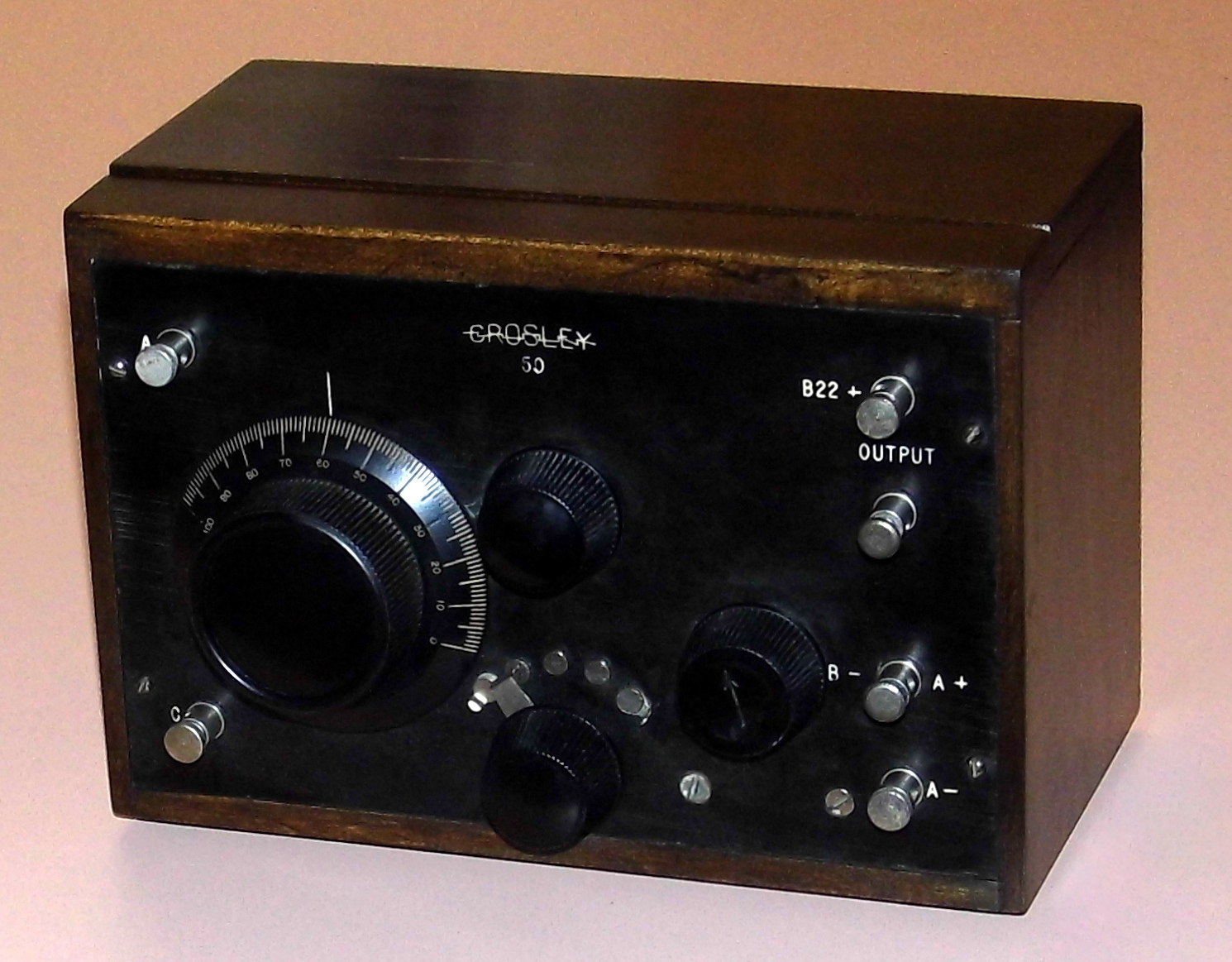
Spirit boxes occupy a strange intersection between technology, paranormal investigation and pattern interpretation.
A typical spirit box rapidly scans portions of radio frequencies. During the sweep, fragments of broadcasts, static and short pieces of speech may be heard. Paranormal investigators may ask questions and interpret certain fragments as responsive communication.
Within paranormal belief systems, those responses may be interpreted as spirit voices using available audio signals. From a skeptical or scientific perspective, ordinary radio fragments, expectation and auditory pattern recognition offer alternative explanations.
Humans are remarkably good at finding meaningful patterns in incomplete information. Once a question is asked, an ambiguous sound can become easier to hear as the word the listener expects. Context strongly influences perception.
For that reason, a few apparently relevant words emerging from a radio sweep do not constitute controlled evidence of contact with a deceased person.
Are spirit boxes dangerous?
Some mediums and paranormal practitioners warn that spirit boxes can attract unwanted entities or create “spirit attachments.” Those claims belong to spiritual belief systems and have not been scientifically established.
There is still a practical reason to be cautious. If an activity is making you frightened, hypervigilant, unable to sleep or increasingly preoccupied with the idea that invisible beings are threatening you, continuing to provoke fear is unlikely to improve the situation.
You do not need to prove or disprove the paranormal before deciding to stop an activity that is making you feel worse.
Ouija Boards and the Ideomotor Effect

Ouija boards carry an even stronger cultural reputation. Horror films and paranormal stories frequently portray the board as a doorway through which something dangerous can enter.
Scientific explanations focus instead on the ideomotor effect: small movements can occur without a person consciously experiencing themselves as the source. With several hands resting lightly on a planchette, those movements accumulate and can feel external.
Research literature on ideomotor action has discussed Ouija boards, pendulums and similar devices as examples of movement that can be generated without deliberate conscious intention.
That explanation does not dictate what every participant must believe spiritually. It does demonstrate that “I did not consciously move it” is not, by itself, proof that a spirit moved it.
If your spiritual tradition discourages Ouija boards, you may choose to avoid them for religious reasons. If they simply frighten you, that is also enough reason not to use one. Curiosity does not create an obligation to experiment with practices you find distressing.
Psychic Scams, Curse Removal and Fear-Based Readings
Spiritual curiosity deserves respect. It also deserves consumer protection.
One of the clearest red flags in psychic services is a reading that suddenly turns into a threat: you have been cursed, dark energy is attached to you, something terrible will happen, your relationship is spiritually blocked—and only the reader can fix the problem if you pay more money.
The U.S. Postal Inspection Service warns consumers about psychic scams involving promises of fortune, claims about bad luck or curses and demands for escalating payments.
The issue remains current. On June 10, 2026, the U.S. Department of Justice announced charges against a Texas couple in an alleged psychic-fraud scheme. Prosecutors alleged that emotionally vulnerable victims were persuaded to send large amounts of money for supposed spiritual cleansing and curse removal. As with any criminal case at the charging stage, the allegations are not proof of guilt and the defendants are presumed innocent unless proven guilty.
The lesson is not “all psychics are scammers.” It is that spirituality does not exempt a business from ordinary consumer judgment.
Major red flags
- You are told that you are cursed and must pay the reader to remove it.
- A frightening prediction is followed immediately by an expensive solution.
- The reader guarantees an outcome in love, health, money or another person’s behavior.
- The cost keeps increasing because additional rituals, materials or sessions are suddenly “required.”
- You are pressured to keep the reading secret from family or friends.
- You are told that stopping payment will allow something bad to happen.
- The reader asks for access to bank accounts, loans, large transfers or financial assets.
- You are discouraged from seeing a doctor, therapist, lawyer or financial professional.
- You are pushed to book repeatedly because only the reader supposedly understands what is happening to you.
A responsible reader can be spiritual without making themselves indispensable.
What an Ethical Spiritual Reading Should Leave You With
A useful reading does not need to end with absolute certainty.
You may leave with a different question, a new perspective or one idea you want to explore. You may feel reassured. You may decide that some parts resonated and others did not. You may even conclude that the reading was not particularly useful.
All of those outcomes preserve your autonomy.
Healthy spiritual guidance generally leaves room for the client’s judgment. It does not demand obedience. It does not make ordinary uncertainty sound like catastrophe. It does not require endless purchases to keep a promised outcome alive.
Transparency matters
Before paying, you should be able to understand how the service is priced. If the session is billed by the minute, know the rate. If it is a fixed appointment, know the duration. If there are additional services, they should not emerge as frightening surprises after the reading begins.
No reader should own your decisions
A psychic might tell you that a relationship appears unfinished. That does not obligate you to return to someone who treated you badly. A reader may see career potential. That does not replace reviewing salary, finances and practical risk. A spiritual message about health does not diagnose a disease or replace medical care.
Uncertainty is not a failure
A practitioner who acknowledges uncertainty may actually be demonstrating more integrity than one who promises total access to invisible truth.
ADVERTISEMENT
Explore Readers Without Rushing the Choice
If you decide that a live psychic or spiritual reading is something you want to explore, take time to compare reader profiles and styles rather than treating the first available reader as automatically right for you.
Questions to Ask in a Guardian Angel Reading
Open-ended questions usually work better than attempts to force a yes-or-no prediction. They give the session room to explore themes while keeping responsibility for decisions where it belongs—with you.
- What pattern in my life deserves more attention right now?
- What strength am I underusing?
- What might this current transition be teaching me?
- Where am I resisting a change I already know I need to make?
- What should I understand about the way I approach relationships?
- What part of my life would benefit from stronger boundaries?
- What creative or professional ability should I take more seriously?
- What does my current challenge reveal about my priorities?
- Is there a recurring theme from my past that may be relevant now?
- What could help me feel more connected to my spiritual practice?
- What should I reflect on before making this decision?
- What would a more aligned version of this situation look like?
Notice that none of those questions requires the reader to take control of your life.
Questions that deserve extra caution
Questions such as “Will this investment make me rich?”, “Should I stop taking my medication?”, “Should I leave my spouse immediately?”, “Is this person secretly watching me?” or “When exactly will someone die?” move into areas where unsupported certainty can cause real harm.
A responsible spiritual reader should know when a question needs to be brought back to appropriate real-world information and professional support.
How to Prepare for a Guardian Angel Reading
You do not need an elaborate ritual. A little preparation can simply make it easier to notice what is useful.
Choose the real question underneath the question
“Will I get a new job?” may actually mean “I feel trapped and I am afraid to make a change.” “Will my ex return?” may mean “I do not know whether to keep waiting or begin letting go.” “What is my purpose?” may mean “My life looks fine, but it no longer feels like mine.”
The deeper question often produces the more useful conversation.
Do not research the reader so obsessively that you script the session
It is sensible to review credentials, pricing and basic reputation. But if you spend hours studying every interview, post and prediction a practitioner has made, you may enter the reading already expecting particular themes.
A little distance can make it easier to notice what actually happens in the session rather than unconsciously steering it toward material you already know.
Decide your spending limit before the session
This is particularly important with per-minute services. Decide in advance what amount feels comfortable. Spiritual curiosity should not become an open-ended financial commitment.
Take notes
Emotional conversations are difficult to remember accurately. Writing down key points allows you to revisit them later when the atmosphere of the session has faded.
Do not force resonance
If something does not make sense, you do not need to manufacture a connection. “That doesn’t resonate with me” is a perfectly acceptable response.
Give important decisions time
A message can feel electrifying in the moment. Let the emotional intensity settle before making a major decision. A useful insight will usually remain worth considering tomorrow.
What to Do After a Guardian Angel Reading
The hour after a reading is not always the best time to decide what the reading meant.
Emotion can make certain statements feel enormous. A suggestion that sounded profound during the session may feel obvious the next morning. Something that initially seemed irrelevant may become more meaningful later. Other material may simply remain a miss.
Write down the strongest points before discussing them with everyone else
Recording your own reaction first can help preserve it. Otherwise another person’s enthusiasm or skepticism may quickly replace your original impression.
Separate specific statements from general themes
If the reader made a concrete claim, write down the exact claim rather than the version you remember after adapting it to later events. This is especially useful with predictions.
Do not turn every later event into confirmation
Suppose a reader says, “I feel a new professional opportunity around you.” If you later receive an ordinary marketing email from a recruiter, that is not necessarily proof that the prediction has been fulfilled. Give interpretations room to remain uncertain.
Notice what changes in your behavior
Sometimes the most useful question is not whether the reading was supernaturally accurate, but whether it encouraged a constructive change. Did you finally make the phone call? Set a boundary? Begin writing again? Admit that you are exhausted? Stop waiting for someone else to decide your life?
That does not prove where the insight came from, but it tells you something about its practical value.
Can You Connect With a Guardian Angel Without Paying for a Reading?
You certainly do not need to purchase a psychic reading in order to have a spiritual practice involving angels.
Depending on your beliefs, prayer may be the most natural approach. Someone from a modern metaphysical background might prefer meditation, journaling or quiet reflection. Another person may simply use the idea of a guardian angel as a reminder to pause before reacting.
A simple practice is to choose one question, sit quietly for several minutes and write down whatever seems important without immediately deciding where the thought came from.
You can return to the page the next day and ask:
- Does this still feel wise?
- Is it compassionate?
- Is it proportionate to the situation?
- Does it respect my values?
- Does it increase clarity rather than panic?
- Can I act on it without ignoring important real-world information?
That process works whether you interpret the insight as intuition, prayer, angelic guidance or simply the result of giving your own mind enough quiet to think.
What About Angel Numbers Such as 444?
Repeating numbers are now so closely associated with angel spirituality that many people encounter 111, 222 or 444 before they ever consider booking an angel reading.
In contemporary angel-number culture, 444 is frequently associated with themes such as support, protection, foundations and stability. Those interpretations are modern spiritual associations rather than one timeless code recognized identically across religions.
Numerology has a much older and broader history of number symbolism, but modern “angel numbers” should not automatically be treated as identical to every numerological tradition.
If 444 keeps appearing around an important decision, one grounded way to work with the symbol is to ask what needs stronger foundations. Money? Boundaries? Health routines? Communication? Planning?
That turns the number into a reflective prompt rather than a fortune-cookie command.
Can a Guardian Angel Tell You Who Your Soulmate Is?
Love questions naturally appear in spiritual readings because relationships create uncertainty, hope and vulnerability.
Some practitioners believe guardian angels or spirit guides can offer information about soulmates or significant relationships. Others describe relationships as part of a pre-birth plan. Those claims belong to spiritual belief frameworks rather than established fact.
The most useful relationship guidance still has to survive contact with reality.
Does the person treat you respectfully? Are they available? Do their actions match their words? Can you communicate honestly? Do you feel safe? Do you want compatible lives?
A soulmate prediction should never become a reason to tolerate manipulation, stalking, abuse, repeated betrayal or an unavailable partner who has clearly asked for distance.
Sometimes the spiritually mature interpretation of a relationship is not “How do I make this person stay?” but “What is this relationship teaching me about what I need?”
Can Guardian Angels Predict the Future?
Many angel readers prefer to describe guidance rather than fixed prediction. That distinction makes sense even within a spiritual worldview.
If people have choices, circumstances change and other people also have choices, then the future is not necessarily best understood as one immovable script.
A reading might identify momentum: a relationship appears to be cooling, a career opportunity seems to be building, or a creative project feels ready for more attention. Treating those impressions as possibilities leaves room for life to continue moving.
Absolute claims deserve more caution, particularly when they involve exact dates, guaranteed financial outcomes, medical events, death or another person’s private thoughts.
When Spiritual Guidance Becomes Compulsive
A reading can begin as curiosity and quietly become a reassurance loop.
You ask whether a relationship will work. The answer feels comforting for a day. Anxiety returns, so you ask another reader. Their answer differs, which increases anxiety. You book a third reading to resolve the disagreement. Soon the original relationship problem has been joined by a new problem: you no longer trust yourself unless someone else gives you an answer.
This is precisely where spiritual services should step back rather than intensify.
A useful boundary: If you keep asking the same high-emotion question because no answer feels reassuring for long, another reading may not be what you need. Time, conversation with someone you trust, practical information or professional support may offer more clarity.
Good spiritual exploration should expand your capacity to make choices, not gradually convince you that choices are impossible without a reader.
Guardian Angels and Loneliness
One reason the idea of guardian angels carries such emotional power is simple: people do not want to feel alone.
The belief that a benevolent presence knows your story can provide comfort during grief, transition or isolation. Prayer, ritual and spiritual community can all become meaningful forms of support.
But spiritual companionship should not make human companionship feel unnecessary.
If the message you take from angel spirituality is “I am supported enough to reconnect with life,” it may encourage movement toward people. Call someone. Join a group. Volunteer. Take a class. Walk the dog where neighbors gather. Return to a hobby. Let the spiritual idea become a bridge rather than a substitute.
This is particularly important in grief. Maintaining an inner relationship with someone who died can coexist with forming new relationships among the living.
Jealousy, Negative Energy and Psychic Protection
Spiritual conversations often use the word energy to describe something that ordinary language might call atmosphere, tension, emotional contagion or the felt effect another person has on us.
You walk into a room after an argument and immediately sense that something is wrong. A chronically negative colleague leaves you exhausted. Someone’s hostility changes your mood even before they say anything directly.
A spiritually oriented person may describe those experiences as picking up negative energy. Another person may explain them through social cues, stress responses and emotional perception.
The important boundary is not to jump from “this interaction felt terrible” to “therefore that person has placed a supernatural curse on me.”
If a protection practice such as prayer, meditation, visualization, grounding or stepping away from hostile interactions helps you feel centered, it can be personally meaningful. It does not require believing that every unpleasant feeling is evidence of an occult attack.
How to Choose a Guardian Angel or Spiritual Reader
No checklist can guarantee that a reader is gifted, ethical or right for you. It can, however, eliminate some obvious mismatches.
Read how they describe their work
Do they specialize in mediumship, angels, tarot, astrology, love readings or general psychic guidance? A highly rated tarot reader is not automatically the right choice if you specifically want mediumship or angel-focused guidance.
Look for clear pricing
Know the rate before you start. If the service is billed by time, watch the clock. Set a limit you are comfortable spending even if the conversation becomes emotionally engaging.
Read reviews for patterns, not supernatural proof
Customer reviews can tell you useful things about communication style, punctuality, professionalism, pressure to purchase additional services and whether the reader appears respectful.
Reviews cannot objectively prove psychic or angelic accuracy. People remember readings differently, provide different amounts of information and evaluate spiritual experiences through different beliefs.
Be cautious with certainty
The more extraordinary the guarantee, the more carefully it deserves to be examined. “I will share the impressions I receive” is very different from “I guarantee that I will reunite you with your ex within seven days.”
Notice how the reader handles disagreement
If something does not fit and the practitioner immediately insists that you are wrong, hiding information or “blocked,” that can become an easy way to make every miss unfalsifiable.
Notice how you feel afterward
A challenging reading can still be useful. But repeated panic, dependency or pressure to spend more money deserves attention.
How to Judge Whether a Reading Was Useful
People sometimes leave a spiritual reading asking only one question: Was it accurate?
Accuracy matters if specific factual claims were made, but it is not the only dimension worth examining. A broader assessment can be more revealing.
Was the reader specific enough to be meaningful?
Statements such as “You have been through difficult things” or “You care deeply about people” apply to enormous numbers of people. More specific statements are easier to evaluate.
Did the reader ask you to supply most of the information?
Conversation is normal, but notice if you found yourself telling the reader the entire story and then receiving your own information back in spiritual language.
Did the session increase clarity or dependency?
A reading that encourages you to think can be valuable even if you remain uncertain. A reading that makes you afraid to act without purchasing another session deserves more caution.
Were you allowed to disagree?
A healthy interaction leaves space for “No, that doesn’t fit.” You should not have to rewrite your own history to make the reading work.
Did the reader stay within appropriate boundaries?
Medical diagnoses, guaranteed investments, legal conclusions and instructions to remain in unsafe situations belong outside responsible spiritual practice.
Guardian Angel Reading FAQ
What is a guardian angel reading?
It is a spiritual or intuitive reading in which guidance is attributed to a guardian angel or angelic presence. The session commonly focuses on the recipient’s life, patterns, strengths, decisions or sense of purpose rather than primarily trying to communicate with a deceased relative.
Is a guardian angel reading the same as mediumship?
Not usually. Mediumship generally refers to claimed communication with deceased people. Guardian angel readings attribute guidance to angels. Some practitioners combine the two, so it is worth checking how an individual reader defines their service.
Is an angel-card reading the same as a guardian angel reading?
Not necessarily. Angel cards are a form of oracle card and can be used without claiming direct communication with a specific guardian angel. Some guardian angel readers use cards, while others do not use any physical tool.
Is my deceased mother, father or grandparent my guardian angel?
People often use that phrase affectionately. Traditional Christian theology distinguishes angels from deceased humans, while many contemporary mediums also describe loved ones and guardian angels as separate kinds of spiritual presence.
Does everyone have a guardian angel?
The answer depends on the spiritual or religious framework being used. Catholic tradition has a strong guardian-angel teaching. Other religious traditions describe angels and divine protection differently. Contemporary spiritual practitioners also disagree about whether a person has one primary angel, several angels or a broader “spirit team.”
Can you have more than one guardian angel?
Some modern practitioners believe so, while others describe one primary guardian angel accompanied by additional angels or guides. There is no scientifically established way to count guardian angels, and religious teachings differ.
What questions should I ask my guardian angel?
Questions about patterns, strengths, lessons, priorities and perspective are often more useful than demands for fixed predictions. “What am I overlooking?” tends to preserve more agency than “Tell me exactly what I must do.”
How do guardian angels communicate?
Believers describe prayer, intuition, dreams, synchronicities, recurring symbols, emotional impressions and readings. Different religious and spiritual traditions interpret these experiences differently, and none provides a scientific test that conclusively identifies an event as angelic communication.
Is 444 a guardian angel number?
In modern angel-number culture, 444 is frequently associated with support, protection, stability and strong foundations. Those meanings are contemporary spiritual interpretations rather than a single ancient definition shared by all religions.
Do guardian angels close doors in your life?
Some spiritual teachers interpret delays or failed opportunities as possible redirection. There is no objective way to prove that an angel caused a particular setback. The idea can still be used reflectively by asking what an obstacle reveals about timing, preparation, priorities or another possible route forward.
Can a guardian angel save someone from an accident?
Stories of extraordinary protection are common in guardian-angel traditions, and some people interpret near misses or near-death experiences this way. Individual accounts can be deeply meaningful but do not provide a scientific method for establishing angelic intervention as the cause of an event.
What is a spirit guide?
Spirit guide is a broad term used primarily in modern spiritual and metaphysical settings for a nonphysical source of guidance or teaching. Definitions vary widely, and a spirit guide is not automatically considered an angel.
Are archangels and guardian angels the same?
Not generally. Archangels such as Michael and Gabriel have broader roles within religious traditions, while a guardian angel is usually understood as having a more personal relationship to an individual. Modern spiritual practices sometimes blend the categories.
Can AI communicate with a deceased loved one?
There is no scientific evidence that generative AI can establish communication with deceased people. AI can imitate elements of a person’s language or personality when supplied with enough data, which can create a convincing simulation without demonstrating that the person’s consciousness is present.
What is a griefbot?
A griefbot or deadbot is an AI system designed to simulate aspects of a deceased person, often using digital material such as texts, emails, recordings or social-media content. Researchers have identified potential uses as well as concerns involving consent, emotional dependency, privacy and misrepresentation.
Is it unhealthy to feel that a deceased person is still near?
Not automatically. Bereavement research documents continuing bonds and sensed-presence experiences among grieving people. Their meaning and impact vary. If an experience becomes frightening, persistent or disruptive to daily life, appropriate professional support is worth seeking rather than relying exclusively on a spiritual explanation.
Do spirit boxes prove that ghosts exist?
No. Spirit boxes sweep radio frequencies and can produce fragments of broadcasts and ambiguous sounds. Paranormal practitioners may interpret some fragments as communication, while ordinary radio interference, expectation and pattern perception offer alternative explanations. The device has not established spirit communication scientifically.
Why does a Ouija board move when nobody thinks they are moving it?
The ideomotor effect provides a well-established psychological mechanism through which small movements can occur without conscious awareness of causing them. This can make a planchette feel as though it is moving independently.
How can I recognize a psychic scam?
Strong warning signs include claims that you are cursed, guarantees of wealth or romance, fear-based pressure, escalating charges, requests for large transfers, secrecy demands and statements that only the practitioner can prevent something terrible from happening.
Should I keep booking readings until I get a clear answer?
Repeatedly asking the same emotional question can create more confusion rather than less. If the urge to seek reassurance keeps returning, it may be more useful to pause and work with practical information, trusted people or appropriate professional support before purchasing another reading.
Can a psychic reading tell me whether to leave a relationship?
A reading may help you reflect on how a relationship feels, but significant relationship decisions should also consider behavior, safety, compatibility, communication and your own values. A prediction should never be used to justify remaining in an abusive or unsafe situation.
Can a guardian angel reading tell me my purpose?
A reader may offer themes they associate with your strengths or direction. It is more useful to treat those themes as material for reflection than as an irreversible assignment. Purpose can change and develop across different periods of life.
How long does a guardian angel reading take?
There is no standard length. Sessions may range from brief online conversations to scheduled appointments lasting an hour or more. What matters most is understanding the pricing structure and duration before the reading begins.
Can a guardian angel reading be done online?
Yes. Many practitioners offer video, phone or chat readings and believe physical proximity is unnecessary for intuitive work. The spiritual validity of that claim cannot be objectively verified, but online formats are now common.
Do I need to tell the reader anything beforehand?
Usually you can begin with the general area you want to explore. Some people prefer providing minimal information so they can evaluate what the reader introduces independently. Others value a more conversational session. Neither approach is inherently better, but it helps to know which style you prefer.
What if nothing in the reading resonates?
You do not have to force a connection. A reading can simply fail to feel relevant or useful. You are not obligated to reinterpret your memories or purchase another session in order to make the experience work.
You Do Not Have to Choose Between Wonder and Discernment
Guardian angels sit in an unusual place in modern culture. They belong to ancient religious traditions and contemporary metaphysical spirituality at the same time. They appear in formal theology, family stories, psychic readings, near-death narratives, number symbolism, prayers and everyday expressions of protection.
A guardian angel reading adds another layer by turning the attention toward your own path.
Maybe you are trying to understand why a door closed. Maybe a series of coincidences has made you curious. Maybe you feel that a chapter of life is ending but cannot yet see the next one. Maybe the simple idea that you are accompanied through a difficult period brings comfort.
You can explore those possibilities without pretending to know more than you know.
A spiritual interpretation can be meaningful without becoming a command. A synchronicity can make you think without determining your future. A reading can give you language for something you already sense without replacing your judgment. A story about an angel can inspire hope without becoming proof that every unexplained event has a supernatural cause.
And when technology enters the picture, the same discernment becomes even more important. An AI can imitate a voice. A spirit box can produce fragments of sound. A Ouija board can move without anyone consciously intending to push it. None of those mechanisms can tell you what a personal experience must mean.
Perhaps that is the most useful place to leave the question of guardian angels: not with forced certainty, but with curiosity, perspective and enough room for your own judgment to remain intact.
If the idea of a guardian angel helps you become calmer, kinder, more courageous, more connected or more willing to examine your life honestly, you already have something worth reflecting on.
You do not have to surrender your discernment in order to leave room for mystery.
